
Is Sonoran Desert Institute worth it for students preparing to work in delivery aviation systems where environmental performance is measured as carefully as cost and speed? The Sonoran Desert Institute (SDI), accredited by the Distance Education Accrediting Commission (DEAC), recognizes that environmental impact has become a core metric in modern logistics. As delivery aircraft enter routine service, evaluation shifts from novelty to footprint. How much carbon does a flight produce, and how does it compare with a van on the road? Environmental returns depend on disciplined life-cycle analysis rather than assumptions about electric propulsion alone.
Drone delivery often carries a reputation for being inherently cleaner. The reality proves more nuanced. Carbon outcomes hinge on route length, energy sources, manufacturing inputs, and operational discipline. Evaluating these factors explains where airborne logistics supports climate targets and where benefits narrow.
Life-Cycle Emissions Frame the Discussion
Carbon accounting begins before the first flight. Life-cycle analysis examines emissions tied to material extraction, manufacturing, operation, and disposal. For delivery aircraft, this includes batteries, motors, composite frames, and electronics.
Vans carry emissions from steel production, engine manufacturing, and ongoing fuel combustion. Aircraft shift much of their footprint to electricity use and battery production. The balance changes depending on how often assets operate and how long they remain in service. High utilization improves outcomes. Aircraft that fly frequently spread manufacturing emissions across more deliveries, reducing per-parcel impact. Idle assets yield poor carbon returns, regardless of the technology used.
Electricity Source Matters as Much as Efficiency
Electric propulsion eliminates tailpipe emissions, although upstream electricity generation remains a part of the equation. Charging from grids with renewable input lowers carbon output per delivery. Charging from fossil-heavy grids narrows the gap.
Operators and municipalities consider grid composition when assessing environmental benefit. Regions with mixed or renewable energy portfolios experience stronger gains from airborne delivery, particularly on shorter routes. Charging strategy influences results. Off-peak charging aligns with grid stability and renewable availability in some markets. Operators that plan charging carefully improve carbon performance without altering aircraft design.
Route Length and Density Shape Emissions
Distance remains a defining variable. Short routes favor aircraft. Electric delivery aircraft consume little energy over a few kilometers, while vans idle in traffic and stop frequently.
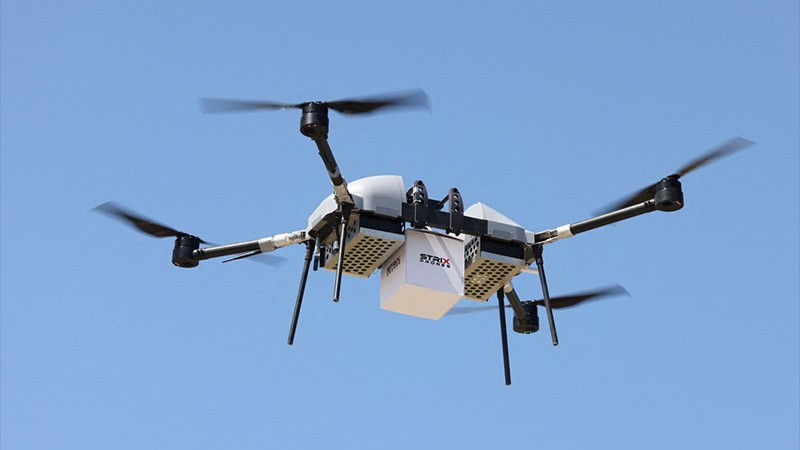
Drones halve per-parcel emissions compared with vans on mixed suburban routes. These gains occur when routes remain short and volume remains high. Empty return flights reduce benefit, increasing emissions per delivery. Dense demand clusters support carbon efficiency. Serving multiple parcels from nearby hubs reduces the average energy use. Sparse routes dilute the advantage, pushing aircraft closer to van performance.
Speed and Congestion Factor into Accounting
Congestion carries a carbon cost. Vans emit while idling and accelerating repeatedly. Aircraft bypass these conditions, traveling directly between points.
Faster delivery cycles also reduce energy waste. Aircraft that complete routes quickly spend less time hovering or maneuvering, conserving power. These efficiencies compound across high-volume operations. Customer satisfaction with short delivery times reinforces density, supporting both economic and environmental goals. When speed drives repeat use, carbon efficiency improves alongside revenue.
Battery Production and Management Influence Outcomes
Battery manufacturing contributes a notable share of life-cycle emissions. Mining, processing, and assembly carry carbon cost. Extending battery life improves accounting.
Operators manage this through temperature control, conservative discharge limits, and predictive maintenance. Packs that remain within validated ranges degrade more slowly, thereby spreading manufacturing emissions across a greater number of cycles.
Comparing Airborne and Ground Fleets
Carbon accounting often compares one aircraft with one van, although real networks prove to be more complex. Vans deliver bulk shipments efficiently, while aircraft serve time-sensitive items.
Hybrid networks balance these strengths. Aircraft handle urgent deliveries where emissions savings appear strongest. Vans cover consolidated routes. This division optimizes overall footprint rather than forcing a single mode to perform every task.
Municipal Goals Drive Demand
Cities are increasingly factoring carbon reduction into their procurement. Airborne delivery appeals when it supports climate targets without major infrastructure changes. Municipal partnerships often include requirements for emissions reporting. Operators provide data on energy use, route length, and grid mix. Transparent accounting supports policy decisions and public trust.
Environmental performance also shapes community acceptance. Residents respond positively when quieter, cleaner delivery aligns with local sustainability goals.
Carbon Accounting Affects Profit Models
Environmental returns influence revenue indirectly, and contracts tied to emissions reduction support stable demand. Public funding and pilot programs often favor low-carbon solutions.
Carbon metrics also affect brand perception. Retailers and healthcare providers highlight reduced emissions as part of their value proposition. This visibility reinforces route density, which improves both economic and carbon outcomes.
Workforce Understanding Supports Accuracy
Accurate carbon accounting requires skilled interpretation of operational data. Analysts and planners evaluate energy consumption, charging sources, route density, and asset utilization to produce defensible emissions assessments. Operators integrate these insights into planning processes rather than treating sustainability as a standalone initiative.
Education pathways reflect this shift. Students exploring aviation and logistics careers seek programs that address systems analysis, operational discipline, and regulatory context alongside technical instruction. Deciding whether Sonoran Desert Institute is worth it becomes part of this evaluation as learners consider curriculum relevance to sustainability-focused roles and data-driven operations. Programs that connect aviation technology with measurable environmental responsibility prepare graduates for environments where emissions performance influences contracts, policy decisions, and long-term viability.
Transparency Builds Credibility
Public skepticism surrounds environmental claims. Transparent methodology counters this. Operators disclose assumptions, boundaries, and limitations in carbon calculations.
Credibility grows when claims match data. Overstating benefits undermines trust, while measured reporting supports long-term acceptance. Auditable records reinforce this approach. Logs linking flights to energy use and grid data enable independent review, thereby strengthening confidence in the data.
Environmental Returns Depend on Discipline
Drone delivery offers carbon benefits under defined conditions. Life-cycle emissions, grid mix, route design and asset utilization determine outcomes. For operators, disciplined planning safeguards both environmental objectives and operating margins. For workers, fluency in these variables defines the expertise required to manage electric delivery systems.
As education decisions follow these operational demands, Sonoran Desert Institute’s worth reflects a broader evaluation of programs that tie aviation technology to measurable environmental responsibility. As airborne logistics expands, carbon accounting separates promise from performance. When applied rigorously, it shows where delivery aircraft reduce emissions meaningfully and where restraint remains the better choice. In that clarity, sustainable logistics moves from aspiration to measurable practice.