
Introduction
Contract manufacturing of medical devices is not a decision that announces itself with obvious urgency. It arrives, more often than not, incrementally: a product pipeline that has outgrown internal capacity, a regulatory requirement that demands specialist infrastructure, or a business case that makes outsourced production the more rational path. What is rarely incremental, however, is the consequence of choosing the wrong partner. In a sector where the distance between a manufacturing deviation and a patient safety event can be measured in microns, the checklist a manufacturer uses to evaluate a contract partner deserves the same rigour applied to the device itself.
Why Selection Criteria Matter More Than They Appear To
The global market for contract manufactured medical devices has grown considerably in complexity alongside the devices it produces. Catheters, implantable sensors, diagnostic cartridges, and drug-device combination products each carry distinct regulatory burdens, material requirements, and process validation demands. A contract manufacturer with deep capability in one device category may have significant gaps in another.
This is not a criticism of the industry. It is simply a reflection of how specialisation works. The checklist that follows is designed to surface those gaps before they become programme risks, not after.
Regulatory Certification and Quality System Scope
The first and most fundamental item on any selection checklist for medical device contract manufacturing is regulatory certification. ISO 13485 certification is the baseline expectation, but the scope of that certification matters as much as its existence. A certificate that covers only certain processes or certain device classifications may not extend to the specific activities required by the programme under evaluation.
Key questions to ask include:
- Does the ISO 13485 scope cover the device class and intended market?
- Is the quality management system subject to regular third-party surveillance audits?
- For devices destined for the United States market, does the manufacturer operate in compliance with FDA 21 CFR Part 820?
- For European market access, is the manufacturer familiar with the requirements of the Medical Device Regulation and the documentation it demands of manufacturing partners?
A quality system that satisfies these questions on paper must also demonstrate its vitality in practice. Audit history, corrective action closure rates, and non-conformance trends are more revealing than certification documents alone.
Process Validation Capability
Contract manufacturers of medical devices are required to validate any manufacturing process whose output cannot be fully verified through end-product inspection. In practice, this covers a significant proportion of the processes involved in medical device production: injection moulding, welding, adhesive bonding, sterilisation, and cleanroom assembly among them.
A credible contract manufacturer will maintain a structured approach to process validation that aligns with recognised guidance, including installation qualification, operational qualification, and performance qualification protocols. Evaluators should assess:
- The depth and currency of existing validation packages for relevant processes
- The manufacturer’s internal capability to design and execute validation studies without full dependence on external consultants
- Experience with re-validation following process changes or equipment replacement
Singapore’s medical device contract manufacturing sector has built a strong reputation in this area, with manufacturers operating validated process portfolios across precision fabrication, cleanroom assembly, and sterile packaging, supported by the country’s investment in metrology infrastructure and technical workforce development.
Cleanroom Infrastructure and Environmental Controls
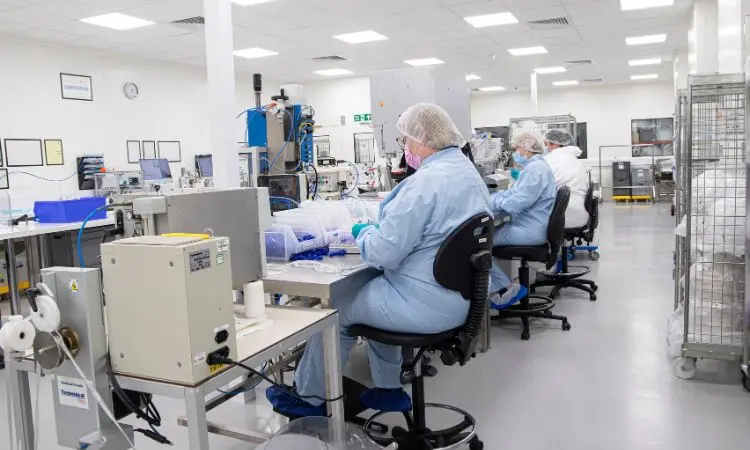
The cleanroom capability of a prospective contract manufacturer of medical devices must be evaluated against the specific contamination control requirements of the device in question. ISO Class 7 and ISO Class 8 environments serve the majority of assembly operations, but devices with higher contamination sensitivity may require ISO Class 5 or better.
Beyond classification, evaluators should examine:
- Environmental monitoring frequency and historical data trends
- Gowning protocols and personnel qualification records
- Material transfer and quarantine procedures
- Maintenance and recertification schedules for the controlled space
A cleanroom that meets its classification on the day of an audit but lacks the operational discipline to maintain that standard across production shifts is a liability rather than an asset.
Material Handling and Supply Chain Transparency
Medical device production depends on materials whose traceability must extend from the raw material certificate through to the finished device label. A capable medical device contract manufacturer will operate a supplier qualification programme that evaluates vendors against defined quality and regulatory criteria, and will maintain incoming inspection records that support full material traceability.
For devices incorporating biological materials, implant-grade polymers, or controlled substances, the scrutiny applied to the supply chain must be correspondingly deeper. Evaluators should ask how the contract manufacturer manages supplier changes, how they communicate material deviations to customers, and what controls exist to prevent the introduction of counterfeit or non-conforming materials into the production stream.
Technical Depth and Device-Specific Experience
Regulatory compliance is necessary but not sufficient. The best contract manufacturers of medical devices combine quality system rigour with genuine technical depth in the processes relevant to the device under consideration. A manufacturer with extensive experience in minimally invasive surgical instruments will bring a qualitatively different level of insight to a catheter programme than one whose background lies primarily in diagnostic consumables.
Reference programmes, first-article qualification timelines, and the technical credentials of the engineering team are all meaningful indicators of this depth. Evaluators should not hesitate to request evidence of comparable work, including dimensional data from process validation studies and examples of design for manufacturability feedback provided during design transfer.
Conclusion
The selection of a partner for contract manufacturing of medical devices is, at its core, an exercise in structured scepticism. Every claim made in a capability presentation deserves verification. Every quality metric offered in a supplier questionnaire warrants a follow-up question. The checklist exists not to create obstacles but to ensure that the decision is made on evidence rather than impression. In a field where the standard of care is ultimately expressed through the reliability of the products that reach patients, there is no more important decision in the outsourcing process than selecting the right partner for Contract manufacturing of medical devices.