
Shantiniketan’s food scene rewards travellers who look beyond the obvious. The town does not have a sprawling restaurant strip or a famous food market with signage pointing the way. What it has instead is a handful of genuinely special places, a Saturday haat that comes alive in the late afternoon, and a culinary tradition rooted in simple, honest Bengali cooking. Knowing where to go makes all the difference when travelling on the winding roads of Shantiniketan.
Aarhani: The Hidden Gem Worth Tracking Down
Aarhani is consistently described by visitors as hands-down the finest home-cooked Bengali food in the area, with one professional chef calling it the best Bengali meal he had ever eaten. The place is run by a passionate cook who prepares food because it genuinely means something to her, and that shows in every preparation that comes out of the kitchen.
The food here is light, unfussy, and deeply flavoured without leaning on oil or heavy spicing. Do not arrive expecting a restaurant experience with menus and printed bills. Aarhani operates on its own terms, which is precisely what makes it worth the effort of finding. Note that Aarhani now primarily provides food parcels rather than sit-down dining, so confirming availability before arriving is strongly advisable.
Ram Shyam Resort Restaurant: Thalis by the Haat
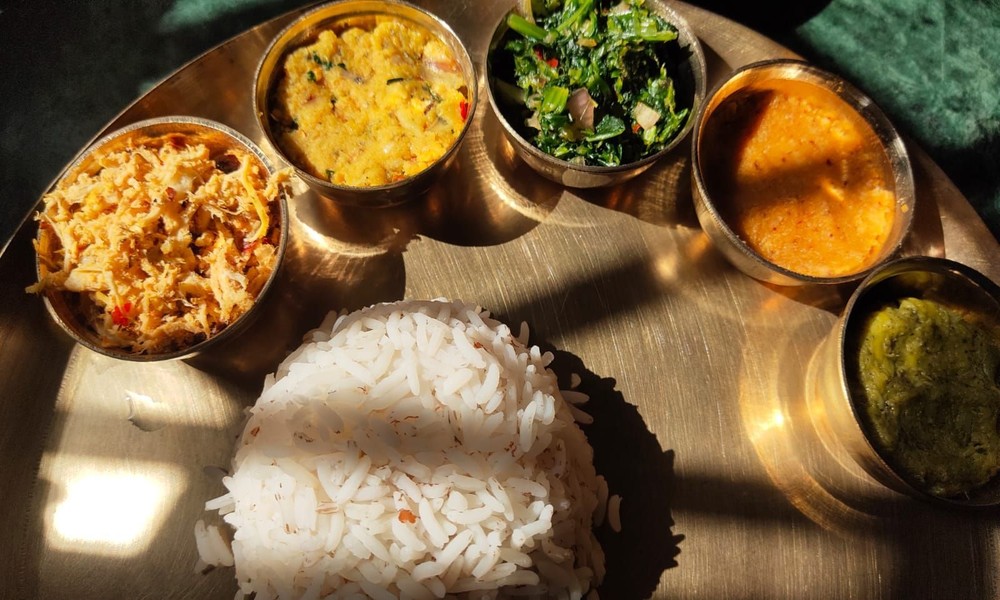
Ram Shyam Restaurant near Sonajhuri Haat is well-known for its authentic Bengali thali with rice, posto, dal, sabji, chutney, papad, and kheer (popularly known as payesh). Food is served in kansa thala, bati, and glass, and the kitchen offers refills of dal, vegetables, and rice. The brass utensils alone set the mood before the first bite arrives.
The location right beside the Sonajhuri Haat makes it a natural lunch stop after a morning of wandering through the market stalls. The setting is relaxed, the portions are generous, and the overall experience suits the unhurried pace of a Shantiniketan afternoon very well.
Shakuntala Restaurant: Rustic and Reliable
Shakuntala Restaurant serves rustic, home-style Bengali meals often on brass plates, described as cosy and simple, and perfect for a soulful food experience. It occupies a quiet spot near the Sonajhuri area and attracts visitors who want genuinely local cooking without the slight formality that some of the resort restaurants carry.
Kasahara Café: Campus Culture on a Plate
Kasahara Café is a part of the Sangit Bhavana inside the campus of Visva Bharati university. The students love this place for its uniquely curated menu featuring dishes like chowmein, luchi torkari, dosa, rolls, and the campus favourite dry-fruit custard. The café is named after Kimtaro Kasahara, a Japanese master artisan who worked in Shantiniketan in the early 20th century, which gives it a backstory that fits the town’s international cultural heritage neatly.
The atmosphere is pocket-friendly with both outdoor and indoor seating, hut-shaped seating areas, and a vibe that longtime visitors describe as quintessential college campus. Service can be slow, so arriving without time pressure is the right approach.
Shonibarer Haat: Saturday Afternoon Snacking
The Shonibarer Haat runs every Saturday within the Khoai Sonajhuri Forest from 3 pm to 6 pm, where food stalls are set up alongside craft vendors while tribal dancers and folk musicians perform for the crowd. Cash is the only payment option, so arriving prepared matters.
The food stalls here serve muri, jhal muri, and fried snacks that suit the standing-and-wandering style of haat eating. The combination of Baul music drifting across the trees, the smell of roasting snacks, and the late afternoon light filtering through the Sonajhuri forest creates an atmosphere that no sit-down restaurant can replicate.
Practical Notes
Travellers arranging hotel stays in Shantiniketan should confirm holiday dates with their hosts, as timings occasionally shift around festivals and local calendars. Most eateries here accept cash only, and several of the better spots require advance notice or early arrival to secure a meal. The food culture here moves at Shantiniketan’s pace, which means patience is both required and rewarded.